

Amniocentesis
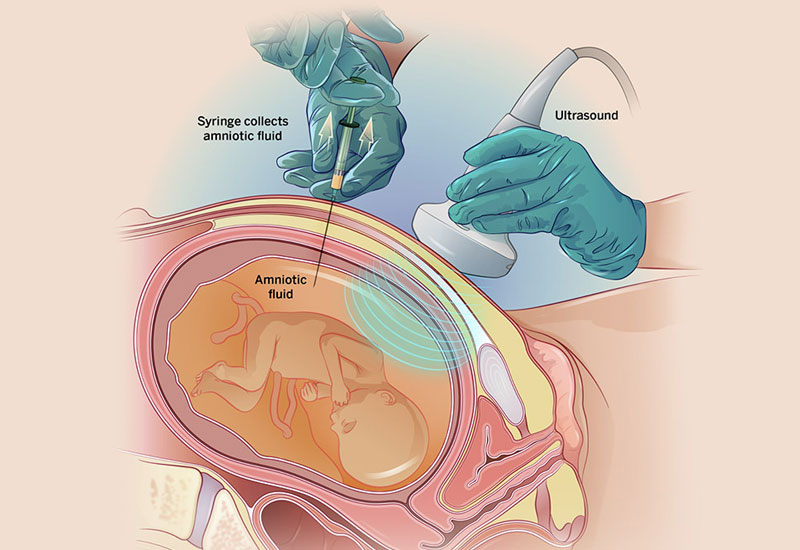
Amniocentesis is a diagnostic prenatal procedure used to detect chromosomal abnormalities, genetic disorders, and certain infections in the fetus. It provides highly accurate information about the baby’s genetic health and is usually advised when screening tests show increased risk, ultrasound detects abnormalities or when there is a family history of genetic conditions.
What Is Amniocentesis?
Amniocentesis involves withdrawing a small amount of amniotic fluid from the womb using a fine needle under continuous ultrasound guidance. The fluid contains fetal cells that are analyzed for chromosomal and genetic abnormalities.
When Is Amniocentesis Performed?
The test is usually performed after 16 weeks of pregnancy. In select medical situations, it may be done later as well for specific diagnostic purposes.
Who Needs Amniocentesis?
- Women with high-risk results in First Trimester Screening or NIPS
- Abnormal findings on anomaly scan
- Previous child with a genetic or chromosomal condition
- Advanced maternal age
- Family history of inherited genetic disorders
How Is the Procedure Performed?
The procedure is carried out under strict ultrasound guidance to ensure safety. A thin sterile needle is inserted through the abdominal wall into the amniotic sac without touching the fetus or placenta, and a small amount of fluid is withdrawn. The procedure usually takes a few minutes and does not require hospitalization.
What Conditions Can Be Detected?
- Chromosomal abnormalities such as Down syndrome, Trisomy 18 and Trisomy 13
- Genetic disorders like thalassemia and other inherited disorders
- Certain fetal infections
How Accurate Is Amniocentesis?
It provides definitive information of fetal genetics, unlike screening tests which only estimate risk.
Is Amniocentesis Safe?
When performed by an experienced fetal medicine specialist under ultrasound guidance, amniocentesis is a safe procedure. There is a small risk of miscarriage (less than 0.3%), infection, or fluid leakage, which will be discussed in detail before the procedure. These risks are mitigated by appropriate post procedure precautions which are explained.
When Will the Results Be Available?
Initial rapid results may be available within 2-3 days. Final chromosomal analysis usually takes about 2–3 weeks. Dr. Ashwini Rathi personally discusses all reports and guides you through further management if needed.
Why Choose Dr. Ashwini Rathi for Amniocentesis?
- MD, MRCOG qualified Fetal Medicine Specialist
- Over 2000+ invasive fetal procedures performed
- Expert ultrasound-guided precision
- High diagnostic accuracy with maximum safety
- Comprehensive genetic counseling before and after the procedure
Under expert hands and advanced ultrasound guidance, amniocentesis at Dr. Ashwini Rathi’s fetal medicine unit is performed with the highest standards of safety, accuracy, and compassionate care.