

Non-Invasive Prenatal Screening
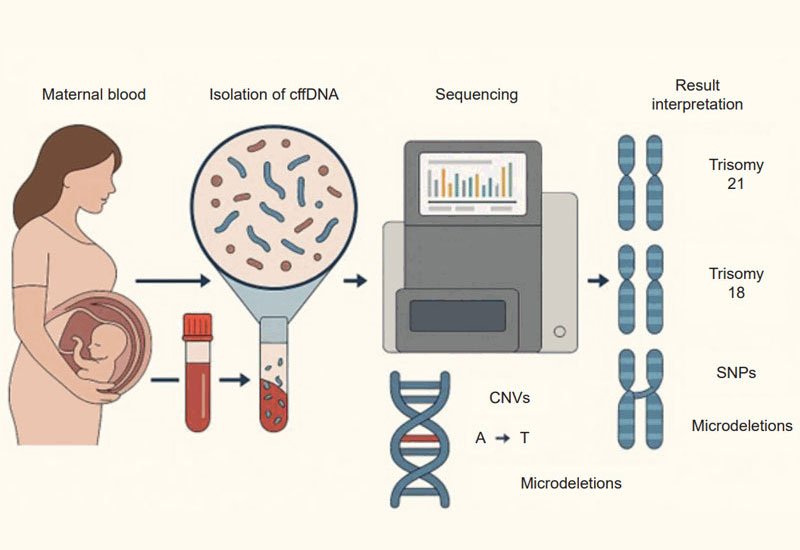
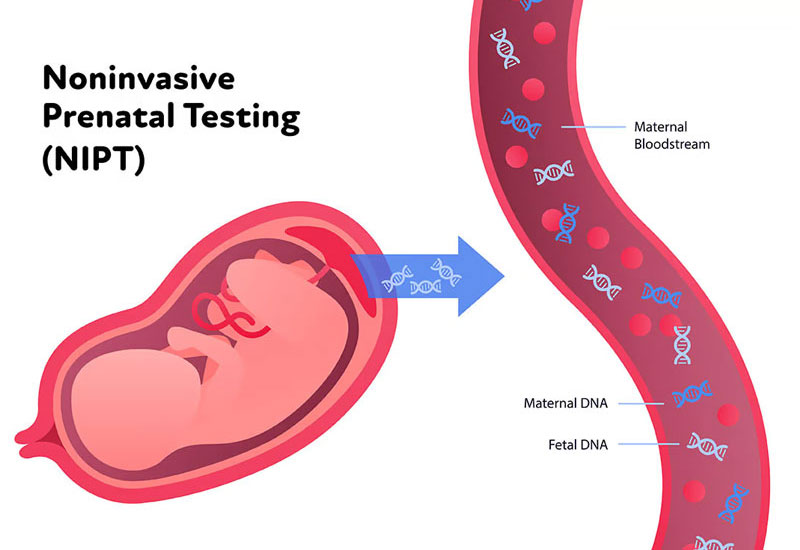
Non-Invasive Prenatal Screening (NIPS) is an advanced blood test that assesses the risk of certain chromosomal conditions in the developing baby. It is a safe, highly sensitive screening test that analyzes fetal DNA circulating in the mother’s blood. Under the expert care of Dr. Ashwini Rathi, NIPS is offered as part of comprehensive early pregnancy screening for accurate and reliable risk assessment.
What is NIPS?
NIPS, also known as cell-free DNA testing, detects small fragments of fetal DNA present in the mother’s blood. By analyzing this DNA, the test estimates the baby’s risk of common chromosomal abnormalities such as Down syndrome (Trisomy 21), Trisomy 18, and Trisomy 13.
What Conditions Does NIPS Screen For?
- Down syndrome (Trisomy 21)
- Trisomy 18
- Trisomy 13
- Sex chromosome abnormalities (such as Turner syndrome)
- Optional screening for select microdeletions (as advised)
Who Should Consider NIPS?
- Women of advanced maternal age
- Previous pregnancy with chromosomal abnormality
- Intermediate risk in first trimester screening results
- Twin pregnancies (eligible in selected cases)
- Parents seeking reassurance over and above routine screening tests
Who Should Not Consider NIPS?
- High risk results in screening tests
- Abnormalities detected in ultrasound like increased NT, absent nasal bone etc
- Triplets and higher order pregnancies
- Parents carriers of single gene disorders
NIPS while being a highly sensitive screening test for Trisomy 21 and common aneuploidies cannot replace NT scan. Also, limitations of NIPS like inability to detect single gene defects or some microdletions/duplications should be well understood.
When is NIPS Performed?
NIPS can be performed as early as 10 weeks of pregnancy. A simple blood sample from the mother is sufficient, and no special preparation is required.
How is the Test Done?
The procedure involves drawing a small amount of blood from the mother’s arm. The sample is sent to a specialized laboratory where fetal DNA is analyzed. Results are usually available within 7–10 working days.
How Accurate is NIPS?
NIPS has a detection rate of more than 99% for Down syndrome and a very high accuracy for Trisomy 18 and Trisomy 13. However, it is a screening test and not a diagnostic test. A high-risk result always requires confirmation by invasive diagnostic procedures such as CVS or amniocentesis.
Is NIPS Safe?
Yes. NIPS is completely safe for both mother and baby since it involves only a maternal blood sample. There is no risk of miscarriage or harm to the pregnancy.
What Do the Results Mean?
A low-risk result indicates a very low chance of the screened chromosomal conditions. A high-risk result means there is an increased probability, and further diagnostic testing is advised for confirmation. Dr. Ashwini Rathi provides detailed pre- and post-test counseling to help parents understand the results clearly.
Why Choose Dr. Ashwini Rathi for NIPS?
- MD, MRCOG qualified Fetal Medicine Specialist
- Expert integration of NIPS with first trimester ultrasound
- Comprehensive genetic counseling support
- Accurate interpretation with evidence-based guidance
- Personalized care for high-risk and low-risk pregnancies
With advanced screening tools like NIPS and expert fetal medicine guidance, Dr. Ashwini Rathi ensures early, accurate, and safe prenatal risk assessment to support informed pregnancy decisions.