

When Your Baby Is Growing Small

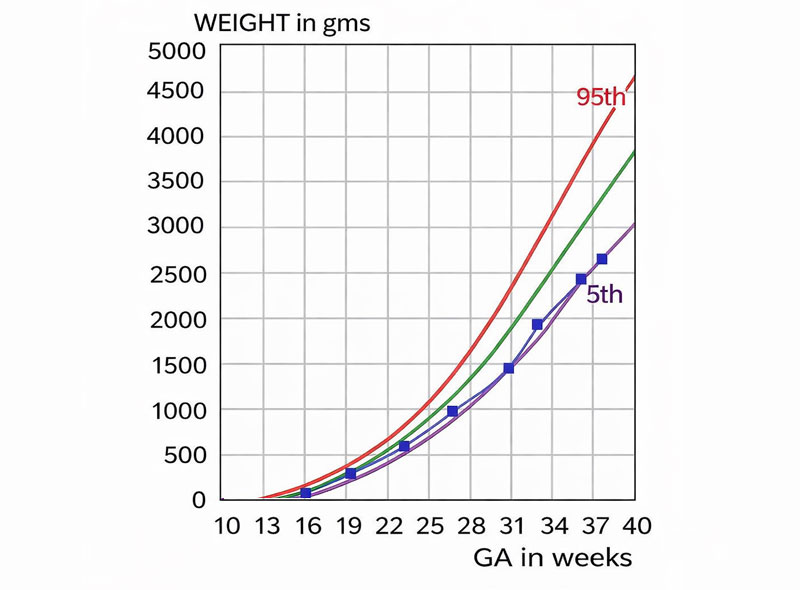

During antenatal visits your obstetrician will measure the height of your growing belly and this is an approximate indication of fetal growth. Many a times you will be told that the uterine height is not corresponding to the period of gestation. This can spark a whole lot of anxiety for some. However; in majority of the cases the situation might not be as grim as it sounds.
After being flagged off as a “small baby” on clinical examination, the next step is to get an ultrasound done to objectively understand the baby weight, amount of fluid around the baby and most importantly the cause for the “smallness” if at all confirmed. One such method is to study the blood flow reaching the baby – called “Dopplers”. Others involve some blood tests on the mother as well as checking her blood pressures etc.
With this information, doctors will be able to guide you regarding the cause and more importantly the follow up schedule. It is very important to understand that fetal growth like most other biological parameters follows a Gaussian curve. Therefore “normal” weight is always a range and not one particular value. The range will be influenced by many factors like parental build, maternal diet, etc. Therefore, as long as fetal parameters fall within the range and maintain their trajectory over a period of time; it should be reassuring.
However; in certain situations, babies might actually be receiving less blood flow or maybe suffering from certain problems, these subset of babies need specialised care and follow up. Many might need to be delivered pre-term. However; with advancing NICU facilities, outcomes for a vast majority will be optimistic.
Dr. Ashwini Rathi is Director of Mumbai Fetal Medicine Centre, Irla Parimal society, Off Juhu lane. Andheri (W) and a consultant at Surya Mother and Child hospital, Santacruz.
For appointments please call – +91-8669227227.